
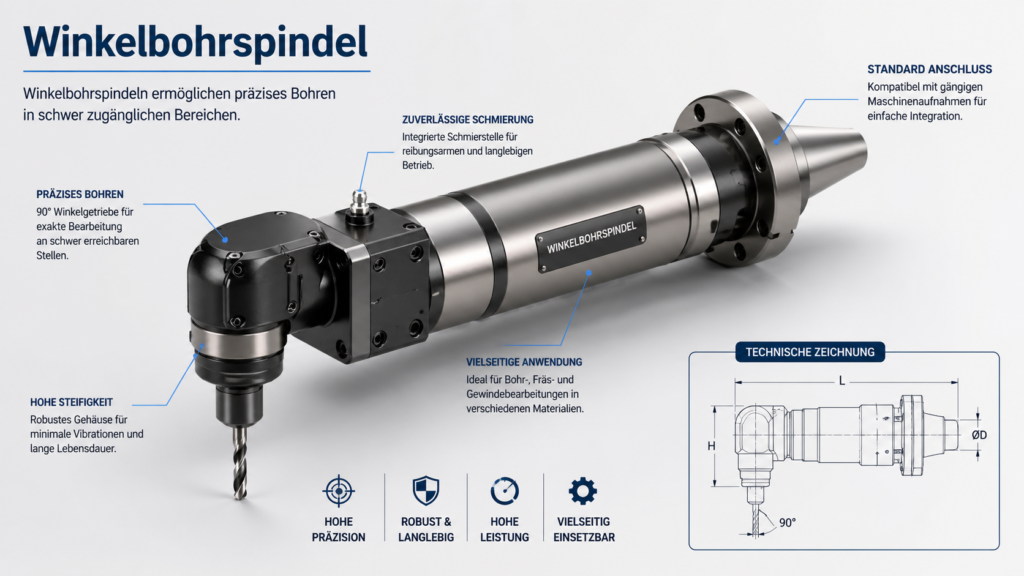

The Winkelbohrspindel, or angular drilling spindle, plays a vital role in the world of precision engineering, where high-quality machinery is paramount. Whether used in manufacturing, mechanical workshops, or specialized production lines, the Winkelbohrspindel offers unmatched accuracy and performance. In this article, we will explore the features, uses, and advantages of this essential tool, providing insights into its importance in modern machining.
What Is a Winkelbohrspindel?
A Winkelbohrspindel is a specialized tool designed to provide precision drilling capabilities at various angles. It consists of a spindle mounted at an angle, typically between 90° and 180°, allowing for drilling operations in confined spaces or at specific angles that are not easily accessible with traditional drilling spindles. The Winkelbohrspindel’s ability to perform angular drilling with high accuracy makes it indispensable in a wide range of industrial applications, from CNC machining to automotive manufacturing.
How Does a Winkelbohrspindel Work?
The primary function of the Winkelbohrspindel is to drill holes at specific angles. The spindle housing is usually integrated with a rotating motor and a cutting tool, allowing for precise control of the drilling process. These spindles can rotate at different speeds, providing flexibility in machining operations.
What sets the Winkelbohrspindel apart from conventional drilling spindles is its ability to tilt and rotate. This feature allows the tool to reach areas that would otherwise be difficult to access. The spindle’s angle can often be adjusted manually or automatically, ensuring that the operator has full control over the drilling trajectory.
Applications of Winkelbohrspindel in Precision Engineering
Winkelbohrspindel spindles are widely used across industries requiring precision drilling, such as automotive, aerospace, and heavy machinery. Below are some of the key applications:
CNC Machining
In Computer Numerical Control (CNC) machining, Winkelbohrspindels enable complex drilling operations at specific angles. The ability to drill holes at angles allows manufacturers to create intricate components with high precision, ensuring that parts fit together seamlessly.
Automotive Manufacturing
The automotive industry relies heavily on Winkelbohrspindels for manufacturing parts like engine blocks, chassis components, and transmission housings. These spindles are often used for drilling holes that are vital for assembly and for ensuring the structural integrity of the final product.
Aerospace Engineering
Precision is a critical factor in aerospace engineering, and Winkelbohrspindels meet the rigorous demands of the industry. They are used for drilling and machining parts with complex geometries, such as turbine blades, aircraft frames, and landing gear components, ensuring they meet strict tolerances for safety and functionality.
Tool and Die Making
In tool and die making, Winkelbohrspindels are used to create molds and dies that require highly accurate holes and cavities. These spindles help reduce manufacturing time and improve the consistency of parts produced in bulk, making them an invaluable tool in the production of specialized molds and dies.
Advantages of Using a Winkelbohrspindel
The Winkelbohrspindel is favored by engineers and machinists for several reasons. Below are the primary advantages of using this precision tool:
Enhanced Precision
The ability to drill at specific angles allows for precise hole placement and accurate geometries. This is particularly beneficial in applications where the quality of the final product is paramount, such as in aerospace or automotive components.
Increased Efficiency
Using a Winkelbohrspindel reduces the need for multiple setups, enabling operators to complete tasks more efficiently. The spindle can drill holes at various angles without changing tools, which speeds up production times and lowers costs in the long run.
Flexibility
With the adjustable angle of the spindle, Winkelbohrspindels can be adapted to a wide variety of tasks. Whether drilling holes in difficult-to-reach places or working with complex materials, this spindle provides the versatility required in demanding industries.
Durability
Winkelbohrspindels are built to withstand the high stress and strain of continuous drilling. These tools are designed to perform reliably in high-volume manufacturing environments, offering longevity and durability in the most challenging conditions.
Key Features to Look for in a Winkelbohrspindel
When selecting a Winkelbohrspindel, several key features should be considered to ensure optimal performance for your specific needs.
Speed and Torque Control
The spindle’s speed and torque control are essential for achieving the desired hole quality and material removal rate. Some Winkelbohrspindels come with variable speed settings, allowing operators to adjust according to the material being drilled and the precision required.
Adjustable Angle
A crucial feature of the Winkelbohrspindel is the ability to adjust the angle of the drill. This feature allows for greater flexibility in machining operations and helps ensure that holes can be drilled at the most efficient angle for the task at hand.
Compatibility with CNC Machines
Many Winkelbohrspindels are designed to be compatible with CNC machines, enhancing the accuracy of automated drilling operations. The integration of these spindles with CNC systems ensures that the tool can be controlled remotely, improving both precision and ease of use.
High-Quality Bearings and Components
The durability and precision of the Winkelbohrspindel are largely determined by the quality of its bearings and internal components. High-quality bearings minimize vibrations, reducing wear on the tool and increasing the longevity of the spindle.
Winkelbohrspindel vs. Traditional Drilling Spindles: Which One to Choose?
While traditional drilling spindles are capable of performing standard drilling operations, they lack the versatility and precision of the Winkelbohrspindel. The Winkelbohrspindel’s ability to drill holes at various angles gives it a significant advantage in applications where conventional spindles cannot reach.
When to Choose Winkelbohrspindel
If your work requires precision drilling at specific angles or in hard-to-reach areas, a Winkelbohrspindel is the tool of choice. Its flexibility and ability to perform complex operations with high accuracy make it an ideal solution for industries like automotive and aerospace, where precision is non-negotiable.
When to Choose Traditional Drilling Spindles
For simpler drilling tasks that do not require angled drilling, traditional spindles may be sufficient. These spindles are often less expensive and may be suitable for applications where precision is less critical.
Maintaining Your Winkelbohrspindel
To ensure the longevity and performance of your Winkelbohrspindel, proper maintenance is essential. Regular cleaning, lubrication, and inspection of the tool will help prevent wear and tear, ensuring consistent performance.
Regular Cleaning
Dirt and debris can accumulate in the spindle housing, leading to a decrease in performance. Cleaning the spindle after each use will help maintain its functionality and prevent damage.
Lubrication
Proper lubrication reduces friction and heat buildup, which can lead to premature wear. Ensure that the spindle is regularly lubricated to keep it running smoothly.
Inspection for Wear
Periodic inspections can help identify potential issues, such as worn-out bearings or damaged components. Early detection of problems can prevent costly repairs and downtime.
Conclusion: Why Winkelbohrspindel is Crucial for Precision Drilling
In conclusion, the Winkelbohrspindel is an indispensable tool in modern precision engineering. Its ability to drill holes at specific angles with high accuracy makes it essential in industries like automotive, aerospace, and CNC machining. The flexibility, durability, and efficiency it offers ensure that high-quality machinery can be produced with minimal downtime. By understanding its features, applications, and benefits, manufacturers can harness the full potential of this precision tool, improving their production processes and ensuring the highest quality results.